WHAT ARE ALTERNATIVE INVESTMENTS?
%20--%3e%3csvg%20version='1.1'%20id='Layer_1'%20xmlns='http://www.w3.org/2000/svg'%20xmlns:xlink='http://www.w3.org/1999/xlink'%20x='0px'%20y='0px'%20viewBox='0%200%20295.5%20295.5'%20style='enable-background:new%200%200%20295.5%20295.5;'%20xml:space='preserve'%3e%3cstyle%20type='text/css'%3e%20.st0{fill:%23231F20;}%20%3c/style%3e%3ctitle%3eclock%20icon%3c/title%3e%3cpath%20class='st0'%20d='M268.8,147.7c0,66.9-54.2,121.1-121.1,121.1c-66.9,0-121.1-54.2-121.1-121.1S80.9,26.6,147.8,26.6V0%20C66.1,0,0,66.1,0,147.8s66.1,147.8,147.8,147.8s147.8-66.1,147.8-147.8c0,0,0,0,0,0H268.8z'/%3e%3cpolygon%20class='st0'%20points='134.4,80.6%20134.4,134.4%20134.4,147.8%20134.4,161.1%20187.8,161.1%20187.8,134.4%20161.1,134.4%20161.1,80.6%20'/%3e%3c/svg%3e) 7 min read
7 min readWhen most people think of investment strategies, they generally think of traditional investments - things like stocks or bonds. But that isn’t the only game out there. How much do you know about alternative investments? In this article, you will learn its definition, the main types of alternative investments, and common strategies you’ll need to know to learn more about other types of investments.
DEFINITION
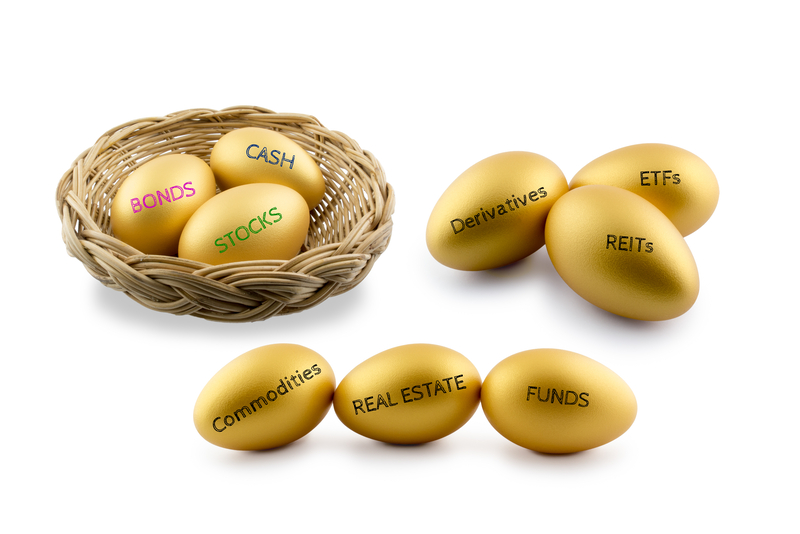
An alternative investment is simple - it’s an investment that falls outside of the category of normal investment such as bonds, cash or stocks. Think of every major stock exchange in the world and they all consist of the traditional strategies and equity where private investors, brokers and financial managers have historically found their success. Alternative investments, for example, are not typically found on a stock exchange. They can be way more lucrative or “underground” as opposed to being on a NASDAQ ticker-tape.
COMMON TYPES OF ALTERNATIVE INVESTMENTS
An alternative investment can take the form of many types of assets nowadays.
- Real Estate - A very common type of alternative investment is real estate. It was almost a foolproof method of investing before the housing financial crisis in 2008. However, historically, it has always been a safe investment as it is one of the more well-known, reliable, appreciating assets.
- Venture Capital - In the age of the online startup boom you may have heard of a Venture Capital or “VC”. These are groups of professional investors looking to invest in the next big product or company by providing the capital necessary for expanding. Of course, the goal here is to be the funding force behind the next Uber or Meta as getting into future profits at the ground level could yield billions if it’s a unicorn.
- Arts and Antiques - Rare art or antiques can both be forms of alternative investing. Imagine buying a Picasso or a Van Gogh right now. As the works age, their value will continue to climb, no matter how much you buy it for now. This is the fundamental idea supporting a non-traditional investment. Other assets can include things like unique wines, valuable watches, even items that are normally an appreciating asset could become worth many times its original value over time such as rare or extremely well-kept automobiles.
- Commodities - Possibly one of the most famous alternative investment examples are commodities which are basically raw material or products used to build other things. Examples would be something like gold or oil. Commodities can rely heavily on supply and demand so investors engaged in commodity trading are quite privy to market fluctuations.
- Digital Securities - This alternative investment idea is primarily a tradable financial asset taking the form of an equity or a financial instrument fixed in income. An example would be an STO or a Security Token Offering. Digital assets have registered a foothold in the investment community as a high risk, high return investment strategy. It is no longer an unconventional investment; hedge funds, public companies, and even private retail investors are all cashing in on this trend. Digital assets like Bitcoin or Ethereum both started out essentially worthless, but as the market galvanised, their value skyrocketed. This is not the case with all crypto, as the market has become saturated. The key is to be knowledgeable about what each cryptocurrency can offer, beyond just its value. Other examples include anything that can be transformed into digitally tokenized pieces of ownership of a given asset, intellectual property such as music rights or non-fungible tokens (NFTs).
WHAT ALTERNATIVE STRATEGIES CAN BE USED
Unconventional investments are popular because they are not dependent on any stock market as regular stocks and bonds are. This means when economic markets trend down, alternative investment assets generally behave independently. The beginning of COVID-19 is a great example. While nearly everything in the global financial market took a hit, crypto was able to tread water better than most. The rebound from dipping to below $9,000 per BTC to swelling well into the $30,000 mark that same year proves it does not behave the same as regular stocks - which took a while to bounce back.
Because of this, large institutional funds and Fortune 500 conglomerates all allocate a small percentage of their portfolio to investing in alternative strategies. There is potential for high rewards, it diversifies investment portfolios, and is a known hedge to market inflation.
Now, there are some drawbacks. Primarily, they can be difficult to value. They are not as commonly traded as a stock or a bond. Investors tend to hold on to an alternative investment asset to allow their worth to increase, but this makes their value harder to pin down. The more unique the asset, the more difficult it can be for the market to assign a price to it. There are also less regulatory requirements. The very nature of an alternative investment pulls interested parties away from the complexities of trading on stock markets. For some, it’s easier to buy a rare piece of art or a large stake in Bitcoin and allow the value to increase. Many forms of alternative investments - especially the unique ones - do not always have historical data on their behavior, making it difficult to predict future returns and to sell quickly if need be.
LOOKING FORWARD
The path to alternative investing was never an easy one for your average retail or hobbyist investor. With the boom of the internet and online resources, the bar of entry has been greatly lowered and is now much more accessible to those without professional investment management resources. Alternative investing generally carries an air of high risk - high reward, but with information and research more readily available, investors can make more informed decisions about where they want to put their money.
Diamaan gueye
Discover related insights

STO VS ICO: ALL YOU NEED TO KNOW
The future of investing has its sights resting on security tokens. Initial public offerings are trending in the direction of using digital currency to represent investments. STOs have risen as the need for regulation of blockchain investment that ICOs tend to lack. Due to its safety and security, it’s the method most investors and regulators will want to use in the future.

SPREAD YOUR WINGS AND LEARN ALL ABOUT ANGEL INVESTORS


