BITCOIN MINING; A SERIES - PART 5: ENVIRONMENTAL CONCERNS & PROGRESS
%20--%3e%3csvg%20version='1.1'%20id='Layer_1'%20xmlns='http://www.w3.org/2000/svg'%20xmlns:xlink='http://www.w3.org/1999/xlink'%20x='0px'%20y='0px'%20viewBox='0%200%20295.5%20295.5'%20style='enable-background:new%200%200%20295.5%20295.5;'%20xml:space='preserve'%3e%3cstyle%20type='text/css'%3e%20.st0{fill:%23231F20;}%20%3c/style%3e%3ctitle%3eclock%20icon%3c/title%3e%3cpath%20class='st0'%20d='M268.8,147.7c0,66.9-54.2,121.1-121.1,121.1c-66.9,0-121.1-54.2-121.1-121.1S80.9,26.6,147.8,26.6V0%20C66.1,0,0,66.1,0,147.8s66.1,147.8,147.8,147.8s147.8-66.1,147.8-147.8c0,0,0,0,0,0H268.8z'/%3e%3cpolygon%20class='st0'%20points='134.4,80.6%20134.4,134.4%20134.4,147.8%20134.4,161.1%20187.8,161.1%20187.8,134.4%20161.1,134.4%20161.1,80.6%20'/%3e%3c/svg%3e) 6 min read
6 min read
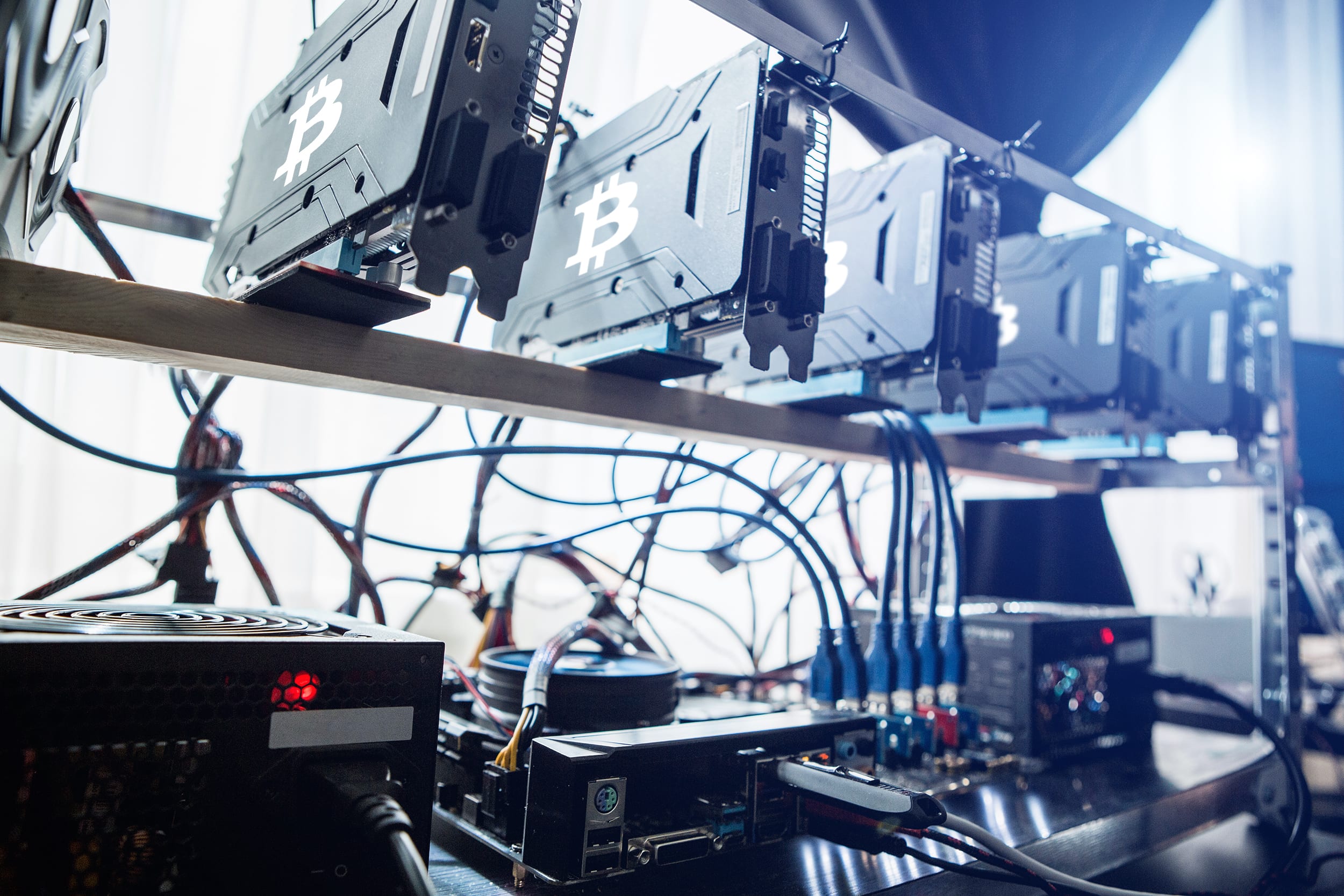
PHOTO COURTESY OF R3dsnake
While profits and wealth increase is an extremely effective selling point of bitcoin mining, there is a flip side to that coin. As the industry ramps up, the discussion of energy consumption is becoming a highly tense subject. It compounds the fact that climate change is getting worse and countries are looking to improve their carbon footprint in the coming decades.
THE CONCERNS OF ENERGY STRAIN
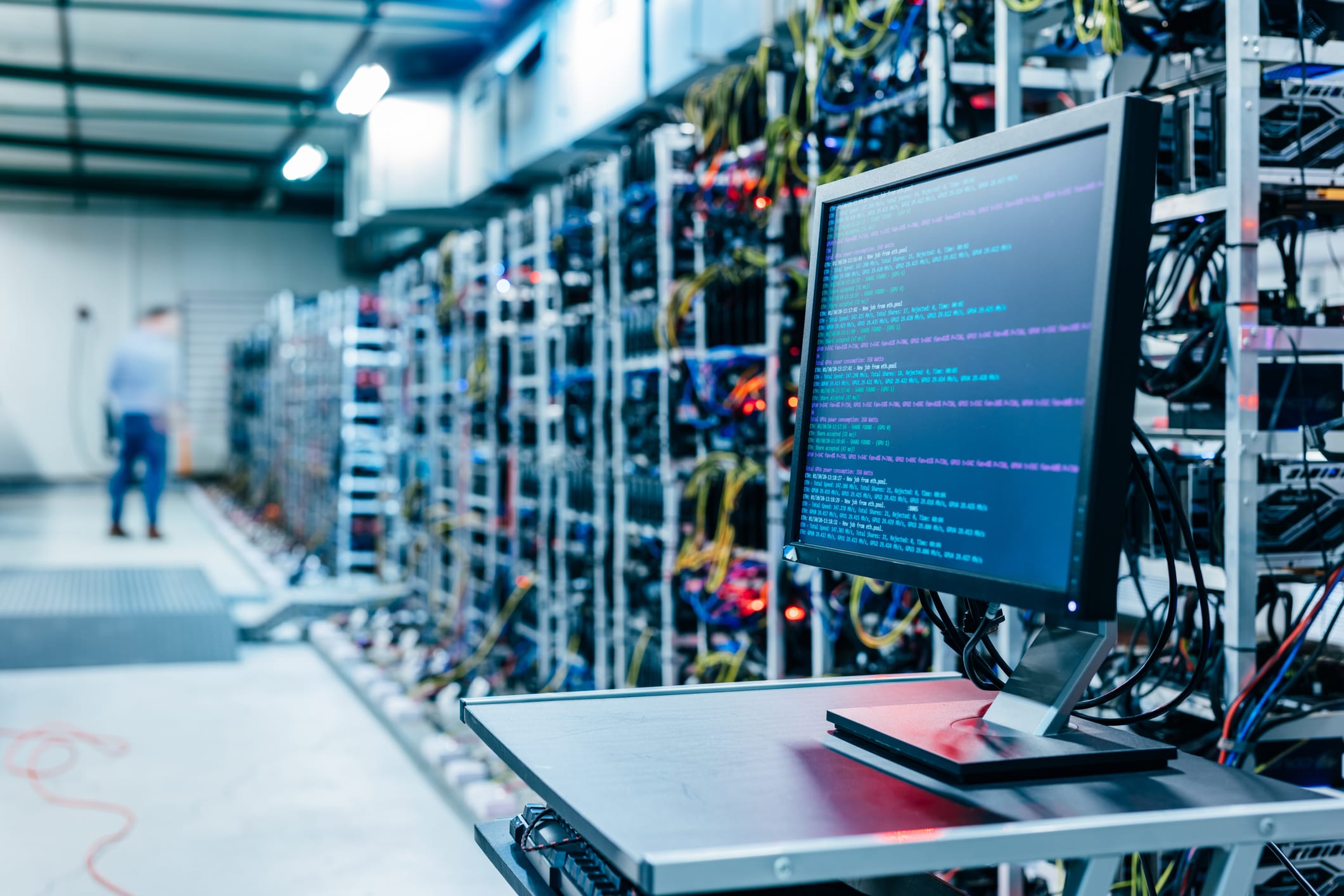
Let’s get the obvious stuff out of the way. On a large scale, bitcoin mining is very energy intensive. Globally, mining uses up 91 terwatts per hour of electricity, more energy than Finland uses in a year and seven times the amount of Google’s annual operations, according to the New York Times. The bitcoin mining network has grown to such heights that it would take a normal computer over a decade to mine one bitcoin, whereas back in 2010, a regular desktop could mine several in a day.
You can clearly see that this is an easy target to raise concern among world governments. China banned crypto mining altogether back in June 2021, which left a pretty big void in the mining space, but countries want to follow suit. Sweden has lobbied the EU to ban it outright, thanks to their EPA and FSA director generals, claiming “Sweden needs the renewable energy targeted by crypto-asset producers for the climate transition of our essential services.” Iceland recently started rejecting all power supply requests for crypto miners, claiming it adds to the strain of the island’s already overworked main utility provider. This mimics a move performed by Kazakhstan earlier this year as they completely removed crypto miners from their power grid.
PROOF OF WORK VS PROOF OF STAKE
Bitcoin runs on a protocol called proof-of-work or PoW. At its most basic level, PoW rewards bitcoin miners with bitcoin based on their ability to solve the puzzles required to verify transactions and add blocks to the blockchain. This is what draws so much energy in bitcoin mining as large amounts of computing power is needed to solve these verification puzzles nowadays. Effectively, the miner with the most computing power and complex machines will be the most successful in mining bitcoin. This is what most cryptocurrency networks are built on today.
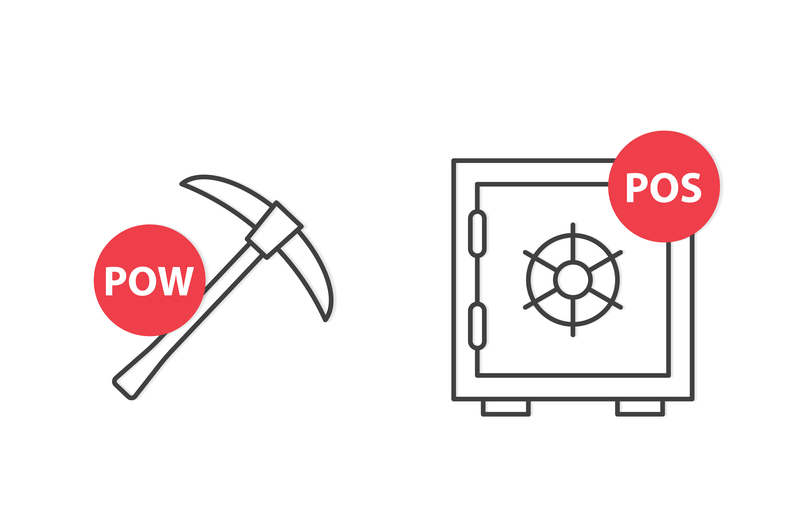
PHOTO COURTESY OF Chrupka
The up and coming alternative is called proof-of-stake or PoS. PoS works by choosing entities committing large stakes of the crypto in the network. Therefore, nodes would be chosen to validate and add blocks to the blockchain based on how much crypto is staked instead of how much computing power it commits to solving verification puzzles. As a result of this, PoS networks can run at 1% of the energy PoW networks require, dramatically reducing this energy demand.
While PoW is still the quintessential basis for how bitcoin stays decentralized, PoS is gaining traction because of its extremely low energy demand by comparison. The Ethereum network has been planning a move to PoS for years now, and plans to finally migrate at the end of this year. Tezos, a PoS coin, is the first cryptocurrency where staking is supported on all exchanges it exists on. Other noteworthy PoS networks include Solana (SOL), Cardano (ADA), Algorand (ALGO) and Av
alanche (AVAX).
However, some career bitcoiners will say that PoS, while undoubtedly leagues ahead in energy efficiency, almost defeats the purpose of a decentralized currency network. According to The Guardian, Chris Bendiksen of Coinshares states, “The problem with proof-of-stake is that it’s not trustless and it’s not censorship-resistant, and it’s not objective.” He also says “There’s no real difference from a high-level perspective between proof-of-stake and consensus shareholder capitalism” (source).
IDEAS AND SOLUTIONS IN PRACTICE
There are some countries and ideas specializing in finding greener ways to mine bitcoin. Most notably, El Salvador is experimenting with using geothermal energy from the country’s abundance of volcanoes. The project, still in its infancy, is being funded by purchase-able bonds issued on the Liquid network. El Salvador has already put a lot of their financial future into Bitcoin, becoming the first country to make it legal tender, so it will be interesting to see where that goes.
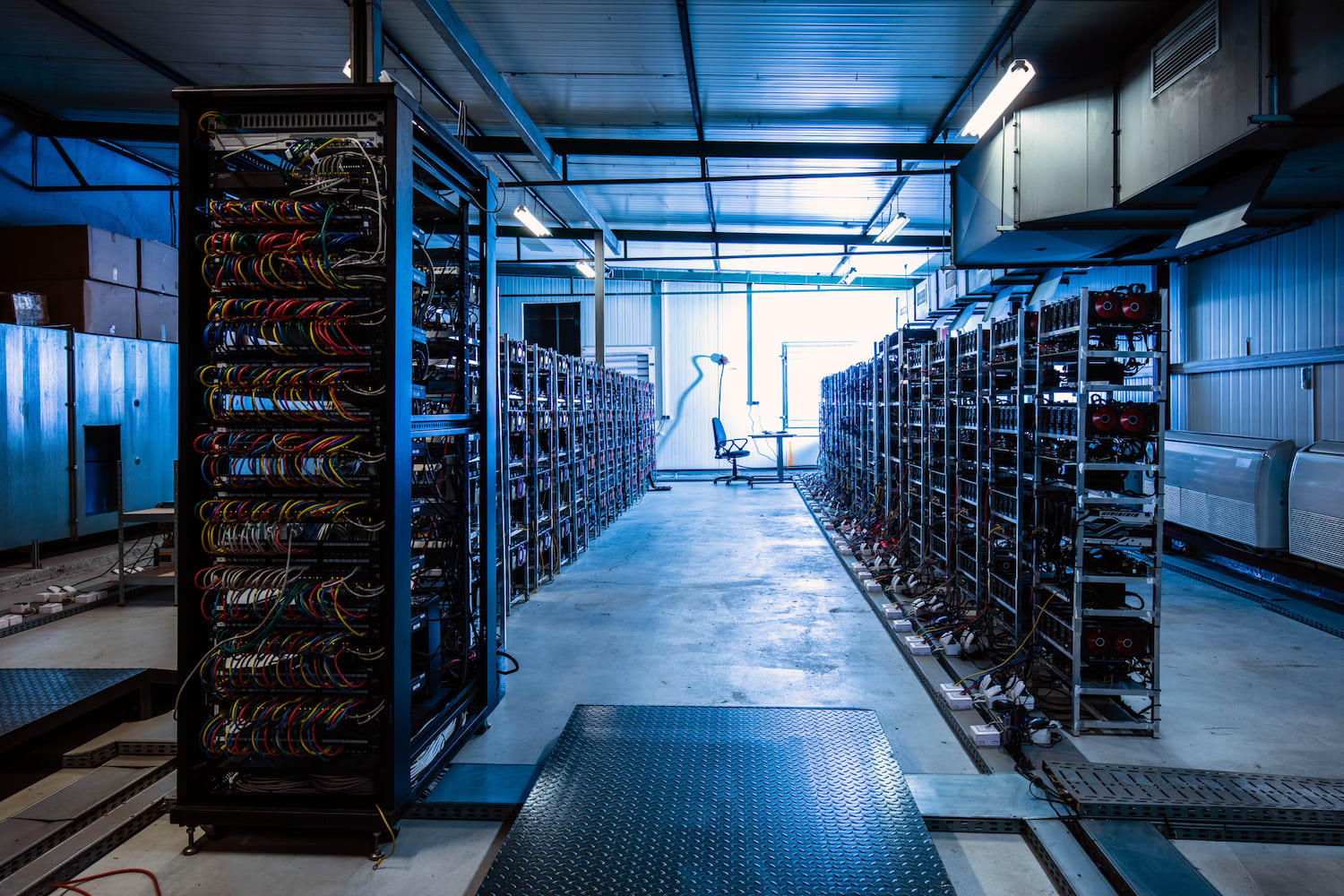
Norway, a haven of sorts for both renewable energy in Europe and cryptocurrency mining, houses a data center called Kryptovault which uses regenerative hydropower to mine Bitcoin. An interesting side feature about this project, is they actually reuse the heat produced by the miners to dry wood logs and starting this year, seaweed as well.
Some are looking at it in a completely different light. Mining rigs don’t always have to be on. They can piggyback on the grids of power providers and turn off when the providers need extra juice at a moments’ notice. In the US, mining company Marathon Digital Holdings has deals in place with some power providers to test this demand response theory as well.
We are close to closing out this series, and we hope that this has been informative for you. In the next and last installment, we will go over some mining projects that exist for both professional and retail investors.
DIAMAAN GUEYE
Discover related insights
BITCOIN MINING; A SERIES - PART 4: MINING AROUND THE WORLD
A quick view into what the mining industry looks like worldwide.
BITCOIN MINING; A SERIES - PART 3: GPU MINING & THE HARDWARE TREND